Suicide of Alan Campbell
Alan Campbell is a young scientist and former intimate of Dorian Gray, whose forced participation in the disposal of Basil Hallward's corpse leads to his own suicide. His death, reported by Lord Henry Wotton as a matter of public gossip, marks the final, silent consequence of Dorian's crime—a man destroyed not by the murder itself, but by the moral and psychological weight of the secret he was compelled to keep.
Background and Relationship with Dorian Gray
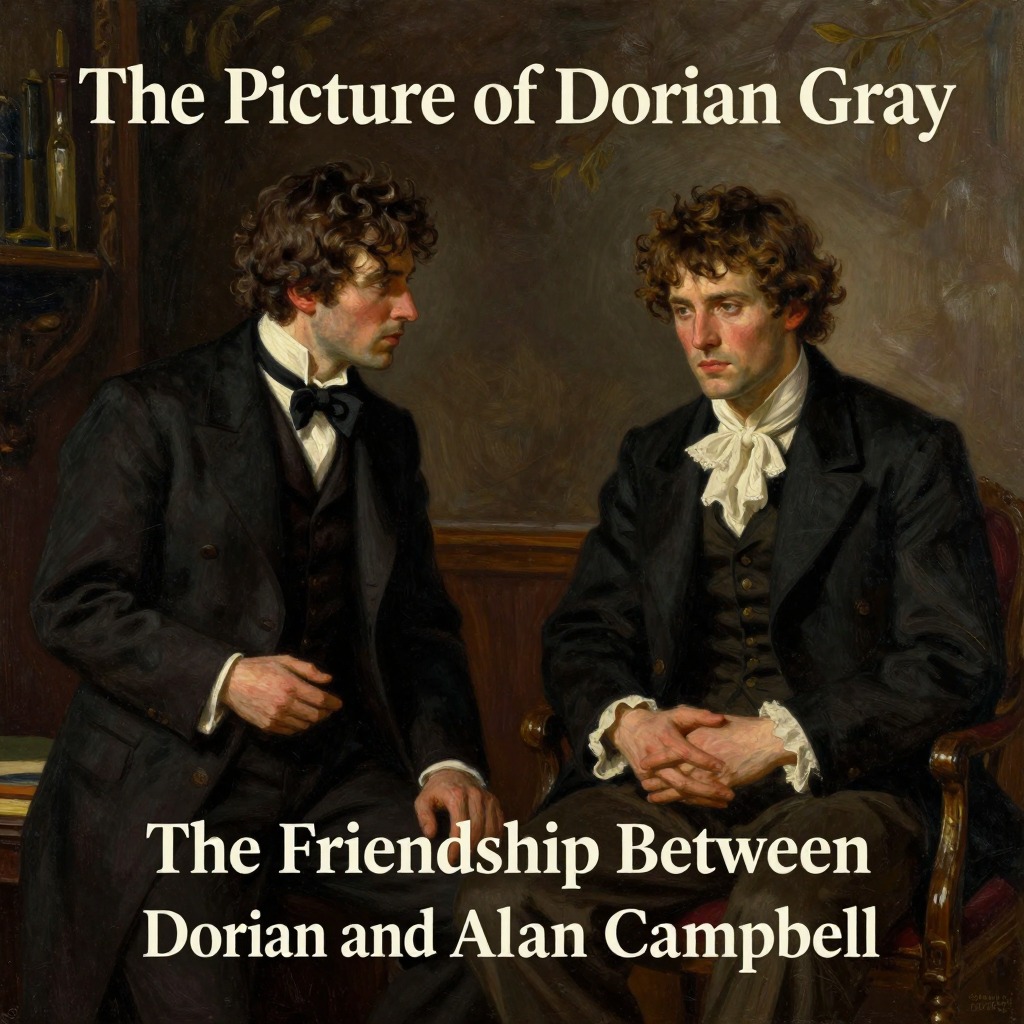
Campbell and Dorian had been great friends once, five years before the murder, almost inseparable. Their intimacy had been forged through a shared love of music—they met at Lady Berkshire's the night Rubinstein played—and through the indefinable attraction Dorian seemed to exercise over everyone. For eighteen months, Campbell was constantly at Selby Royal or in Grosvenor Square, and to him, as to many others, Dorian Gray was the type of everything wonderful and fascinating in life. Campbell was an extremely clever young man, though he had no real appreciation of the visible arts; whatever little sense of the beauty of poetry he possessed he had gained entirely from Dorian. His dominant intellectual passion was for science: at Cambridge he had spent a great deal of time in the laboratory, taken a good class in the Natural Science tripos, and later maintained his own laboratory, where he would shut himself up all day, greatly to the annoyance of his mother, who wanted him to stand for Parliament. He was also an excellent musician, playing both violin and piano better than most amateurs. Then, suddenly, the intimacy ended. No one ever knew whether a quarrel had taken place, but people remarked that they scarcely spoke when they met, and that Campbell always left early from any party where Dorian was present. He became strangely melancholy, seemed almost to dislike hearing passionate music, and would never play himself, claiming he was too absorbed in science. His name appeared in scientific reviews in connection with curious experiments.
The Coercion and Disposal of the Body
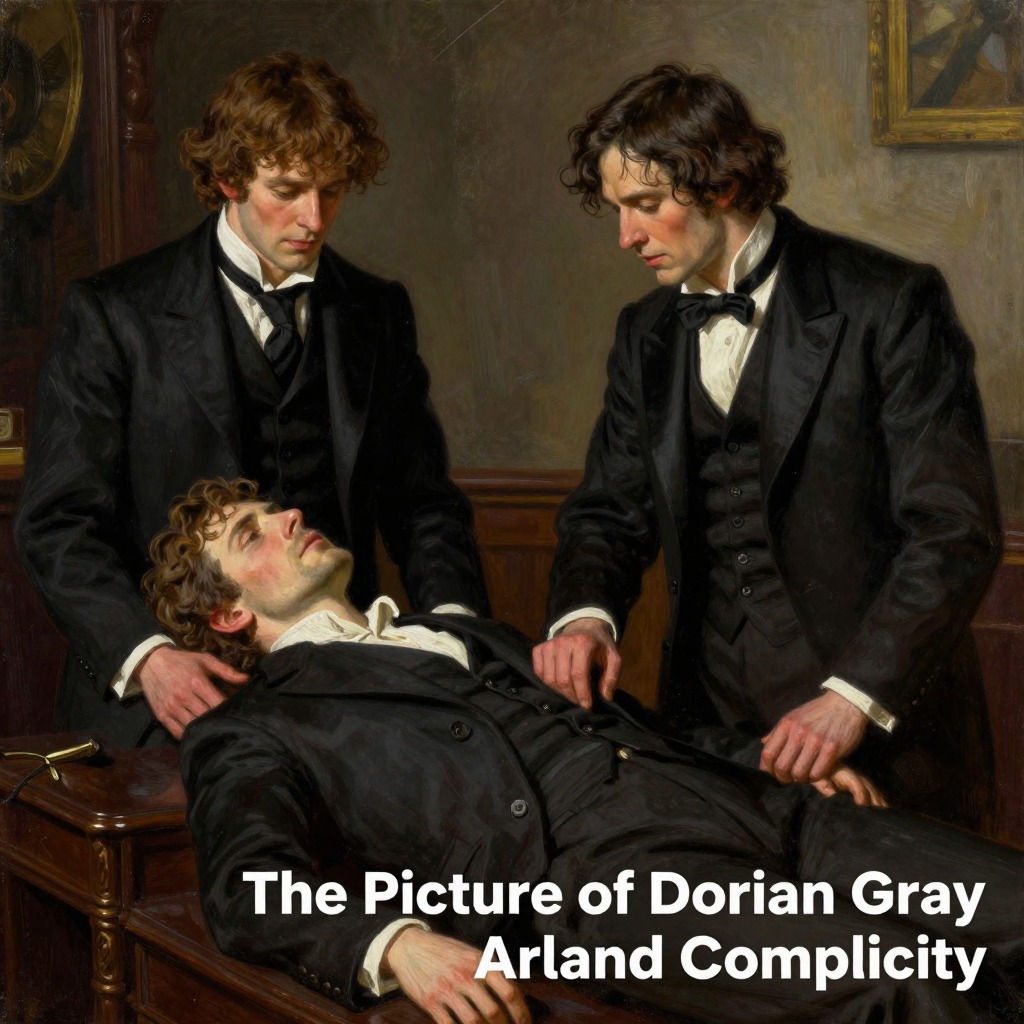
On the morning after the murder, Dorian sent a note to Campbell's address at 152, Hertford Street, Mayfair, summoning him on a matter of life and death. Campbell arrived looking stern and pale, his pallor intensified by his coal-black hair and dark eyebrows. He declared he had intended never to enter Dorian's house again, and when Dorian revealed that a dead man was seated at a table in a locked room upstairs, Campbell refused absolutely to be mixed up in it. Dorian then produced a letter he had already written, and Campbell, after reading it, became ghastly pale and fell back in his chair, a horrible sense of sickness overcoming him. Dorian had a hold over him—some secret that forced Campbell's compliance. Campbell wrote a list of chemicals and equipment, which Dorian's servant fetched from his laboratory. For nearly twenty minutes neither man spoke; a fly buzzed noisily about the room, and the ticking of the clock was like the beat of a hammer. Campbell then went upstairs with the mahogany chest of chemicals, the electric battery, the steel and platinum wire, and the iron clamps. He locked himself in the room. It was long after seven o'clock when he returned to the library, pale but absolutely calm. "I have done what you asked me to do," he muttered. "And now, good-by. Let us never see each other again." Dorian thanked him, saying he had saved him from ruin, but Campbell made no reply.
The Suicide and Its Aftermath
Some time later, Lord Henry casually informed Dorian that Alan Campbell had shot himself one night in his laboratory. The suicide became a topic of public gossip, mentioned alongside Lord Henry's own divorce case and the mysterious disappearance of Basil Hallward. Campbell had not revealed the secret he had been forced to know; he took it to his grave. Dorian, reflecting on the event, felt that Campbell's suicide was his own act, that he had chosen to do it, and that it was nothing to him. The death of Alan Campbell, like the murder of Basil Hallward, became another piece of evidence that Dorian's life had left a trail of ruined and dead men, but it also served as a final, silent seal on the crime—the one man who could have testified against Dorian had removed himself from the world.